Vetta for equipment rental shops
Booked and paid at 11 pm. On your own site.
The software an independent rental shop runs on. Online booking, the desk, the texts, the deliveries and the books on one record, and an AI layer that reads all of it and drafts the next move for a person to approve.
The system
What your customer sees. What your desk sees.
Twelve chapters, in the order a rental happens. Every screen on this page is the working software on a demo shop. The shop, the people and the numbers are made up. The full film, with captions, is at play.vetta.build.
The pieces, drawn in the kit. Illustrative data.
Equipment rental
Customers book and pay on the shop’s own site.
Live availability for every unit, the dates on a calendar, delivery or pickup, and the card charged for the rental with the deposit held at pickup. It drops into the shop’s existing website with one line.
Equipment rental
Every customer, their history, and a way to reach them.
Each customer carries their bookings, their payments, the licence and the card on file. Members get their rate at checkout without a code. An email to a list of customers goes out as a draft, with consent, and a person approves it first.
Equipment rental
Deliveries priced at checkout and planned as one run.
Delivery is priced at checkout by zone from the yard; out of zone, the desk quotes it. The day’s drops and pickups are put in order as one run with their windows.
Your customer
Book it online.
The shop’s own booking page, on the shop’s own website. Every machine with its day and week rate, and whether it is free for the days picked. The question that stops a stranger from booking, will my truck tow it, does it fit the gate, is answered by the website’s AI from the machine’s own specs and Ontario’s towing rules, at 2 am. Then the days, the attachments, the total line by line, the card held by Stripe, and the driver’s licence from the phone’s camera.
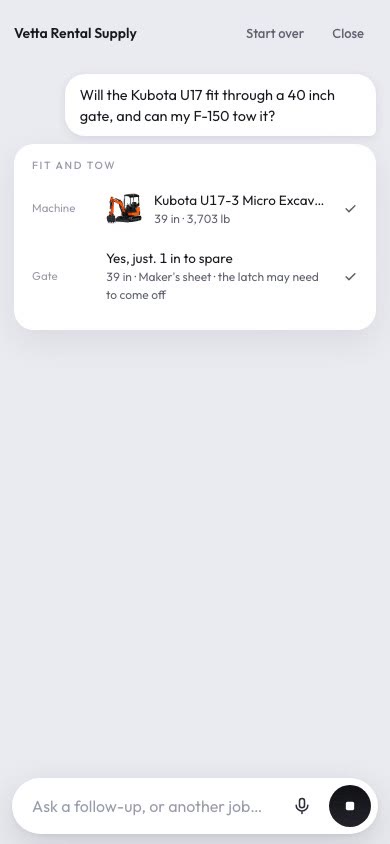
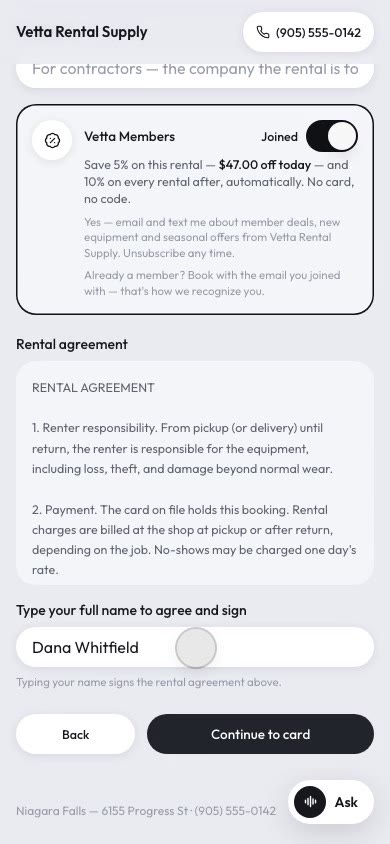
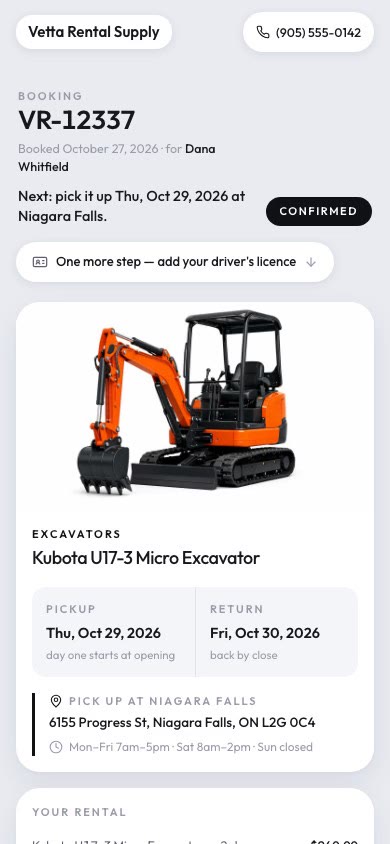
The text, and their booking page.
Seconds later, a text from the shop’s own number: the reference, the machine, the days, the pickup address and a private link. The link opens their booking page, no login, no app: paid in full with the receipt, the licence on file, a rating asked for after the return, and a new card when one is declined. Nobody at the shop typed any of it.
Vetta Rental Supply: VR-12337 confirmed — Kubota U17-3 Micro Excavator, Oct 29 to Oct 30. Your booking: demo.vetta.build/b/b7c7… Pickup: 6155 Progress St, Niagara Falls. Questions? (905) 555-0142
Your desk
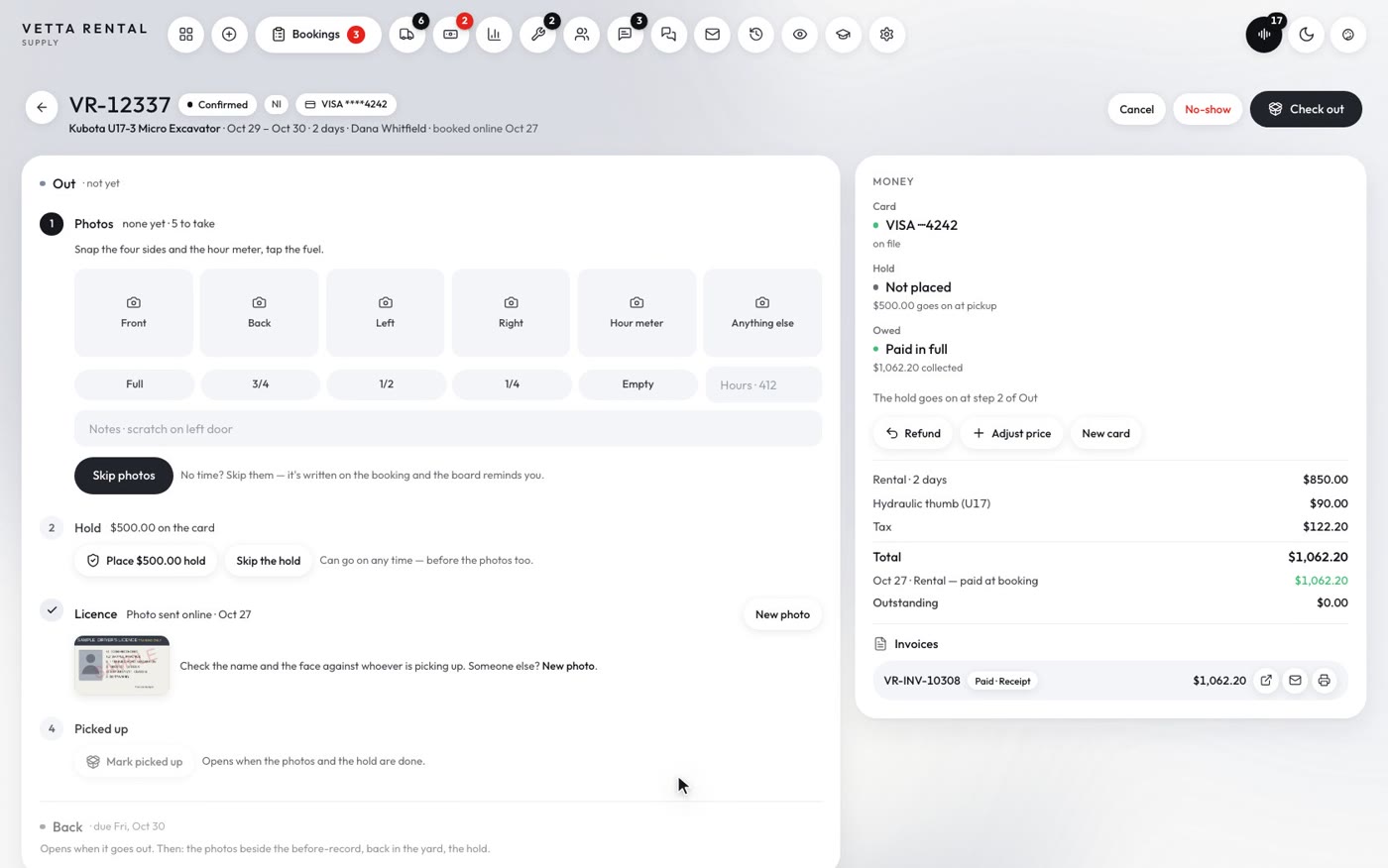
The desk, and the job card.
The Command Center: the month so far, what goes out and comes back today, the late ones in red, and one line from Vetta AI on what needs a person. Last night’s booking is on the board. Its job card holds one next step at the top, the money on the right, the trail underneath. Pickup is photos of four sides and the hour meter, and the deposit holds on the card they booked with.
The counter.
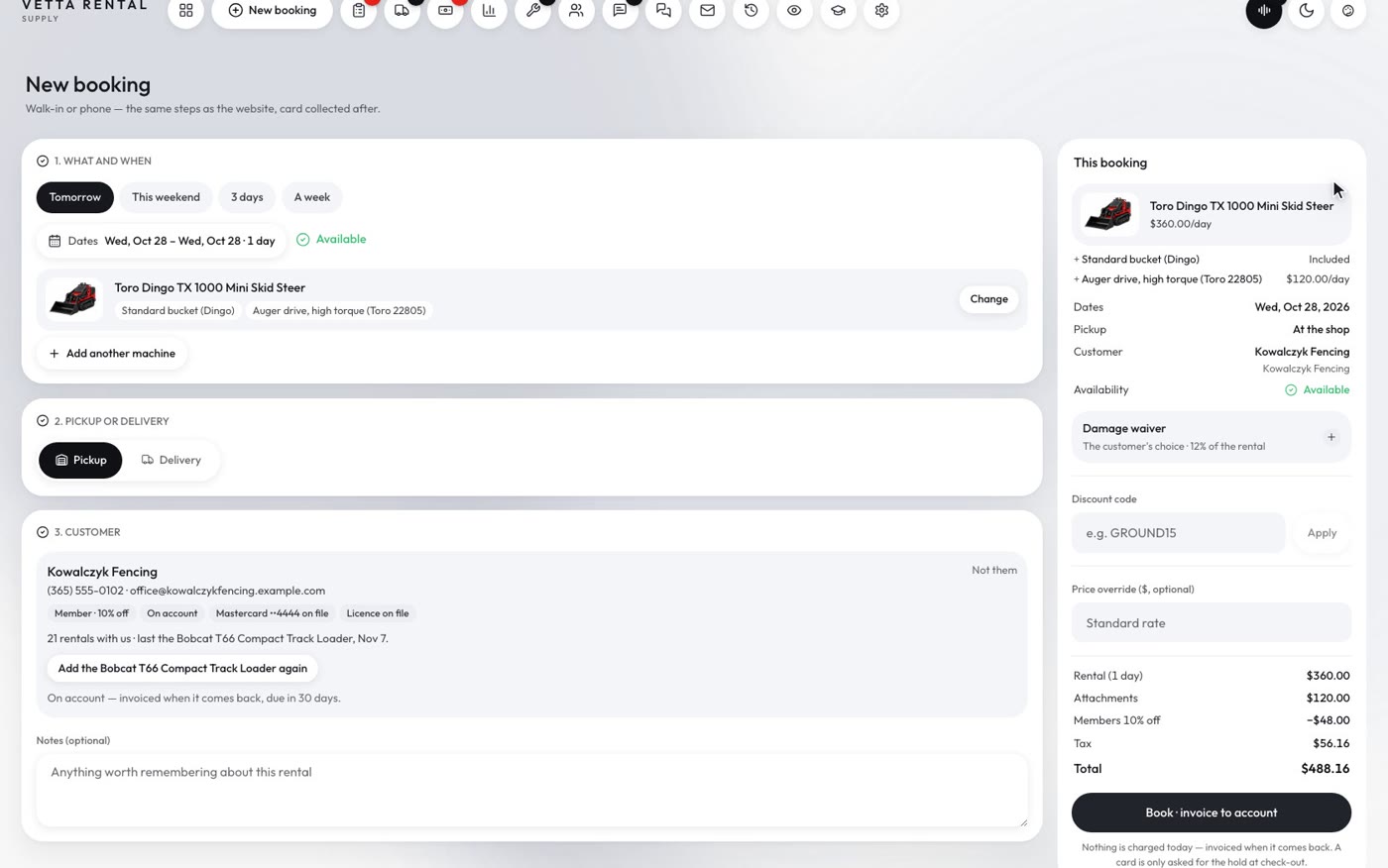
A walk-in or a phone call, booked by staff in under a minute: the days, the machine with its attachments, pickup or delivery, the customer in one search box, the price as you go. A card in Stripe’s own field, or the rental goes on the company’s account and is invoiced. The same record as the online booking.
Deliveries, and the run.
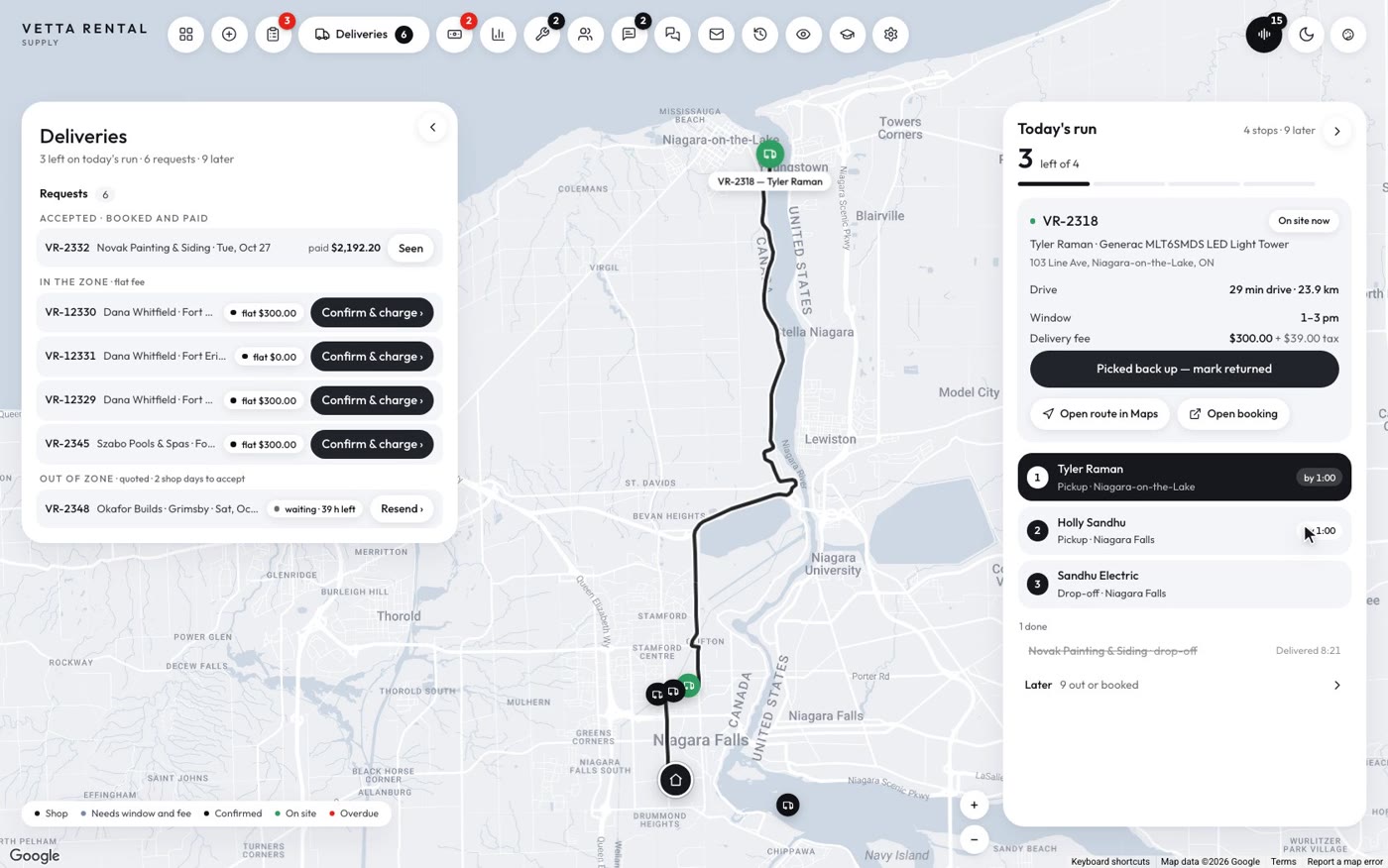
Online delivery requests land with the zone and the fee already worked out; out of zone, the desk quotes it. Confirm the window and the customer gets the text. Today’s run is the stops in order with their windows and the drive times from the yard, and one press opens the route in Maps.
The follow-up texts.
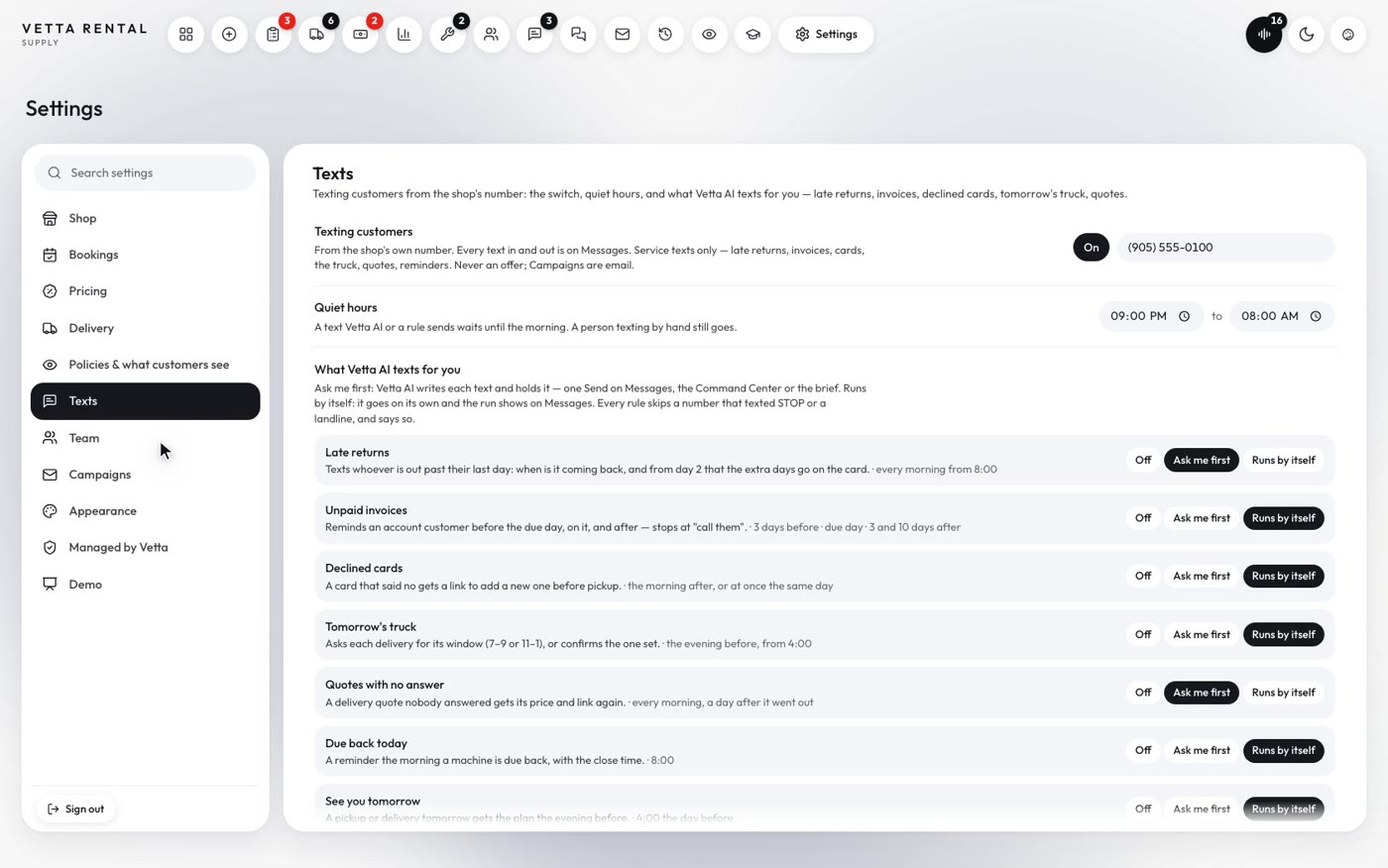
Late returns, declined cards, unpaid invoices, tomorrow’s truck, due-back reminders: written from the booking and sent from the shop’s number. Every rule is a switch the shop owns: off, ask me first, or runs by itself. On ask me first, the desk shows the drafts and a person presses Send. When a customer texts back, the software reads it: “keep it till Friday” comes back priced, with the reply drafted and the extension one press away.
Vetta AI, on the desk.
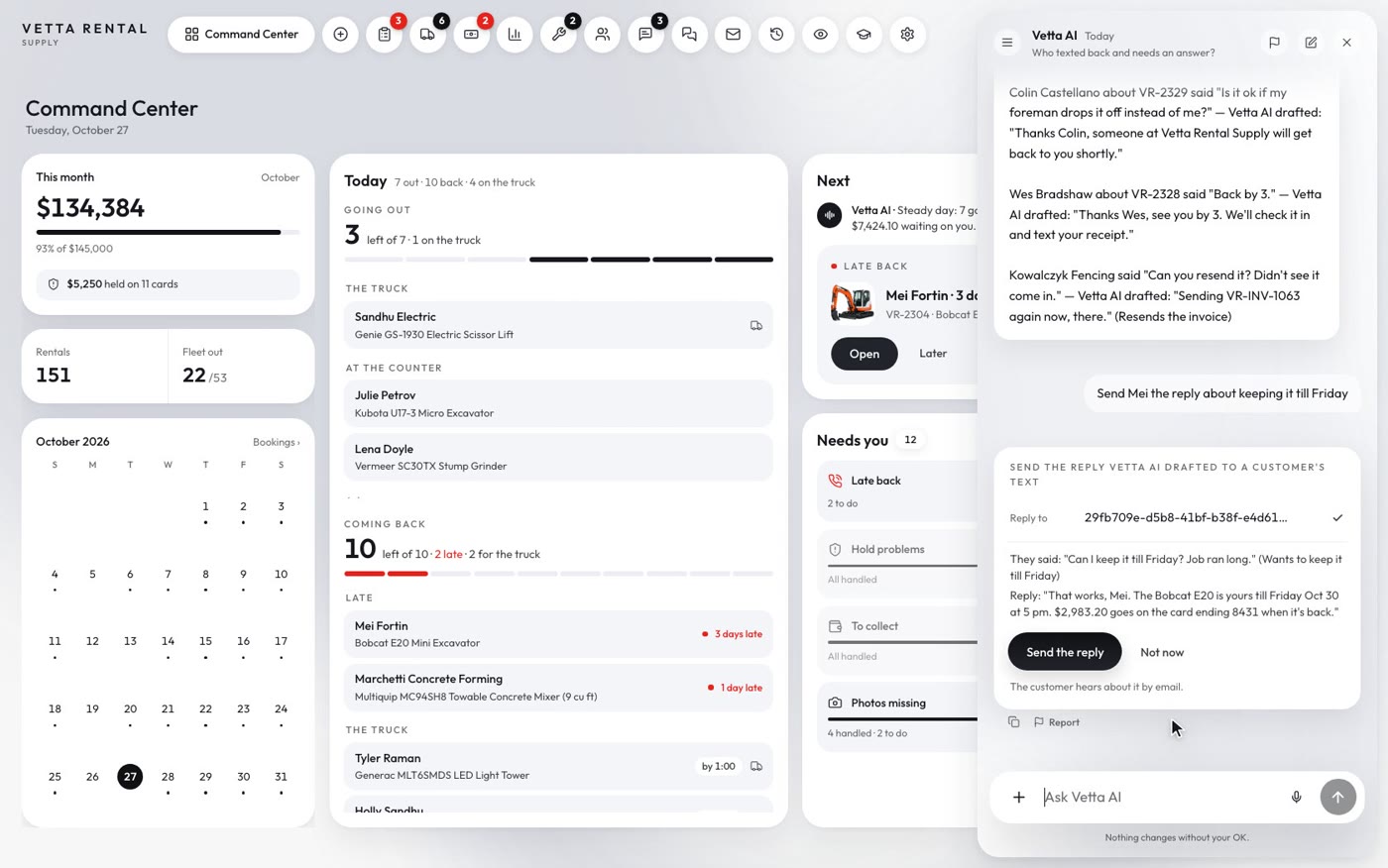
The same AI as the website’s, on the staff side. It knows every booking, machine, customer and dollar in the shop. Ask who texted back and needs an answer. Tell it to send Mei the reply about Friday, and the words, the booking and the number come back on one card with one Send. Change a rule by saying so. It never sends on its own.
The website’s AI, from the desk.
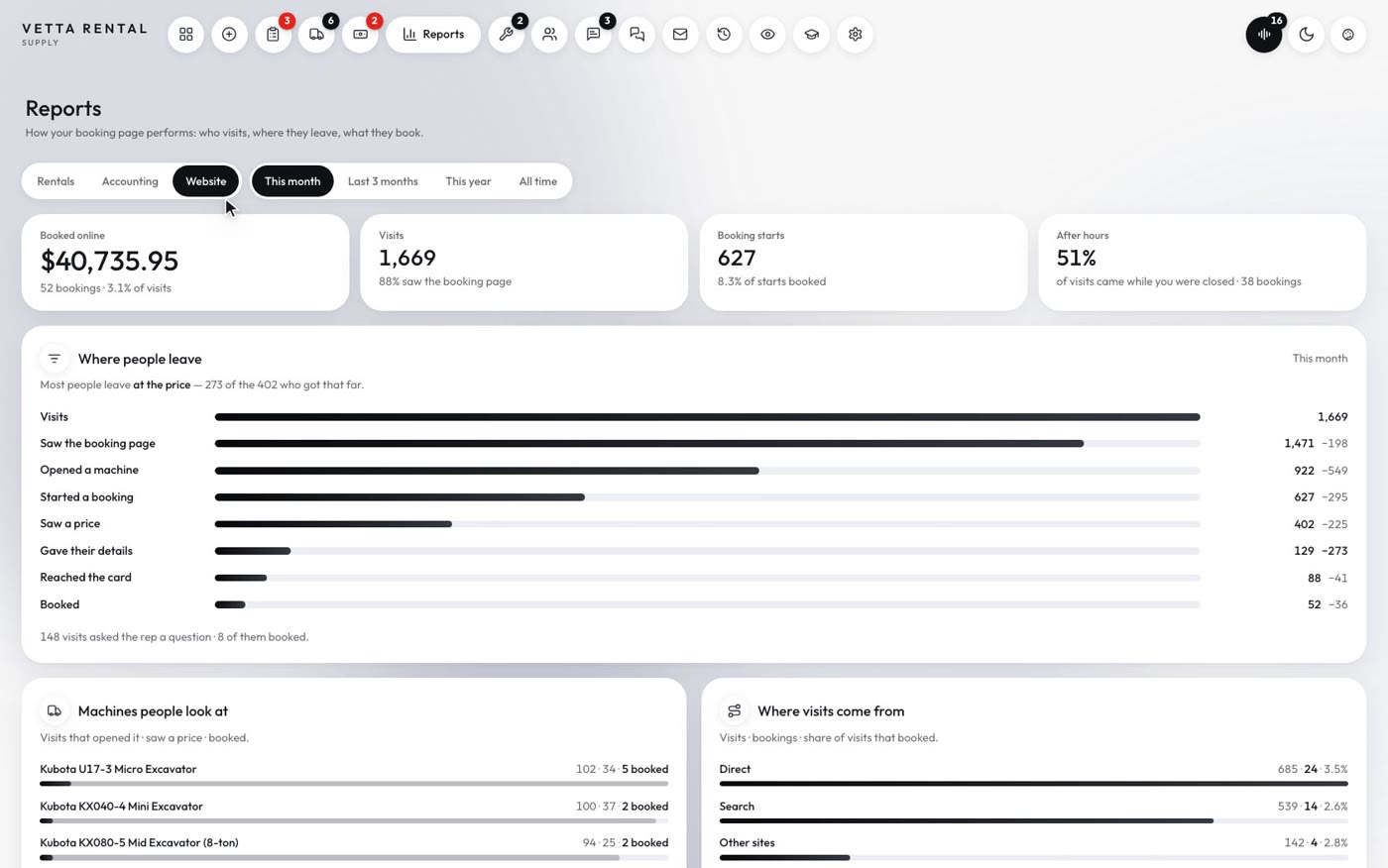
Every conversation the website had, at 6 am and at 11 pm, with what each one cost in cents. Thirty days of what people asked for, including the machines the shop does not carry. A big job it would not guess at becomes a call-back note with a number. Views, machine pages opened, quotes shown, bookings made, and where people drop off.
Campaigns.
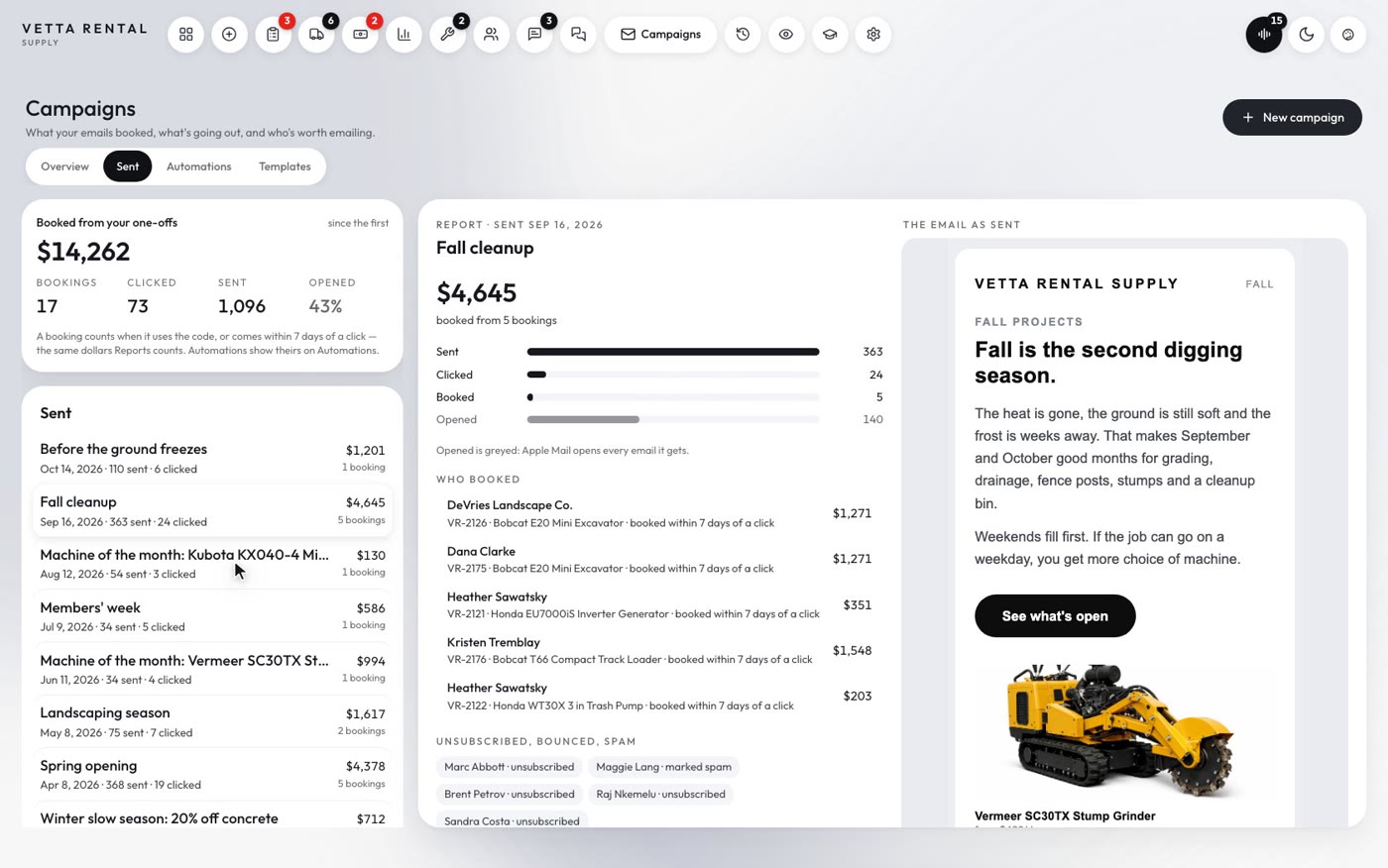
Email to the shop’s own customers, with their consent, one a week at most. Vetta AI reads the season, the fleet and the customers and suggests the email: who, which machine, when. The draft is one press; the owner approves it before anything goes out. A booking counts only when it used the code or came within a week of a click, the same dollars the money page counts.
Money, and the books.
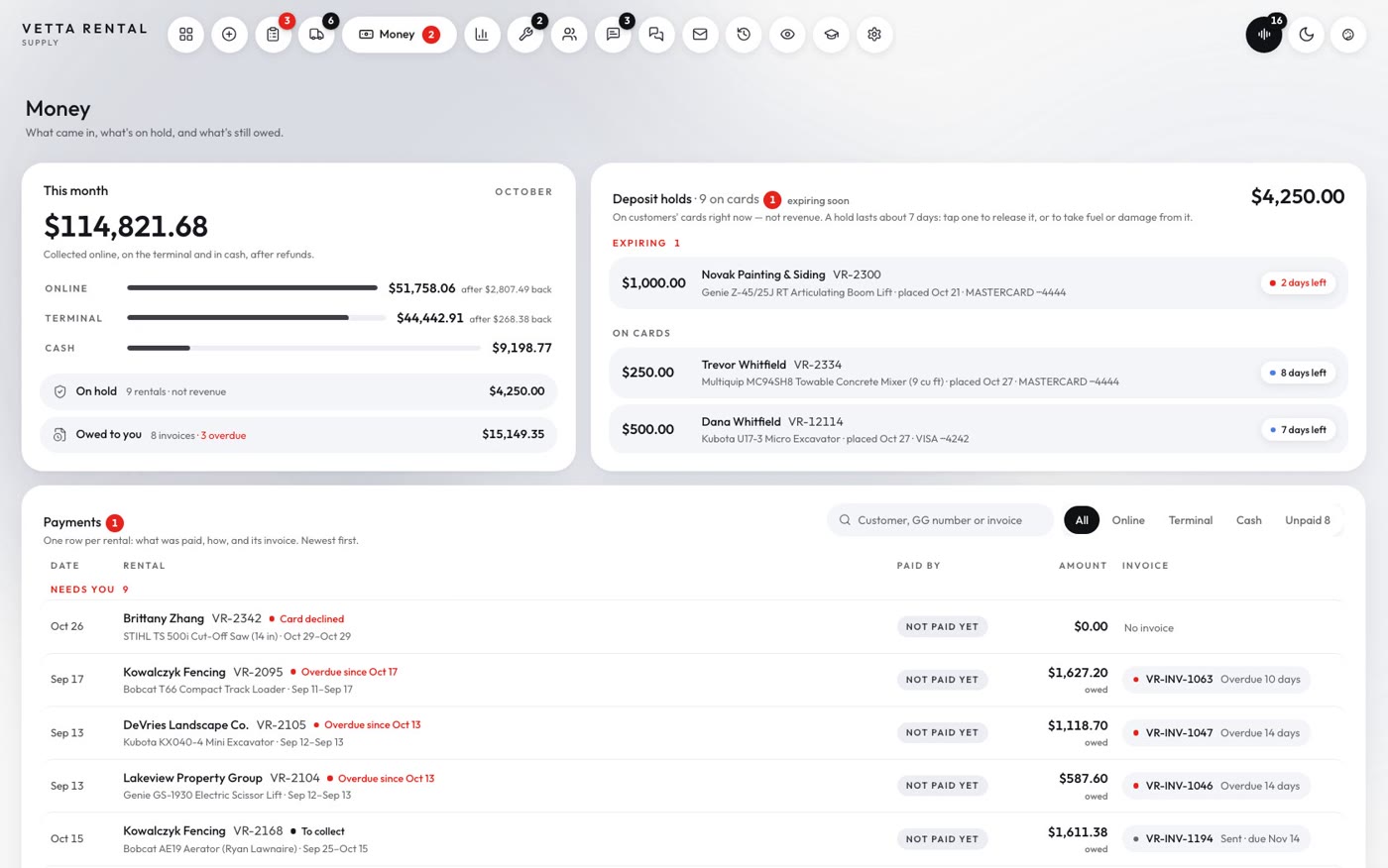
This month by rail: online, terminal, cash, with refunds netted. Every deposit hold on a card, and the ones about to expire. Invoices out, the overdue first, chased by the follow-up texts. For the accountant: sales before tax, HST to remit, money in by rail, any period, and a QuickBooks journal that imports, Online or Desktop. Payments are checked against the processor every day.
The fleet, and service.
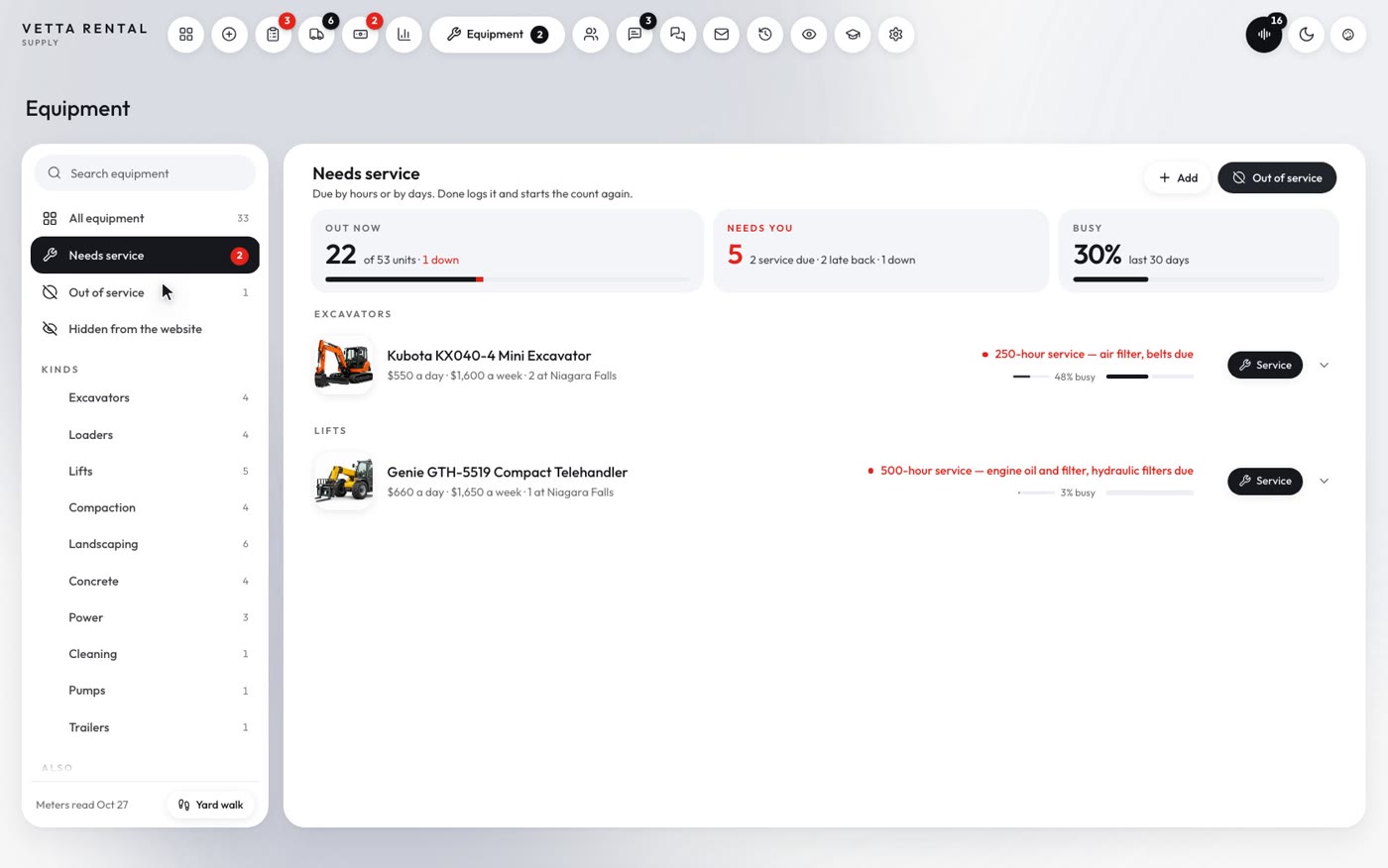
Every machine: out or in, how busy in the last thirty days, what it earned, and what it cost in fuel, repairs and parts from receipts snapped on a phone. Hours are read on the yard walk. The maker’s intervals set the service due, and the website stops offering a machine that is due.
The receipt.
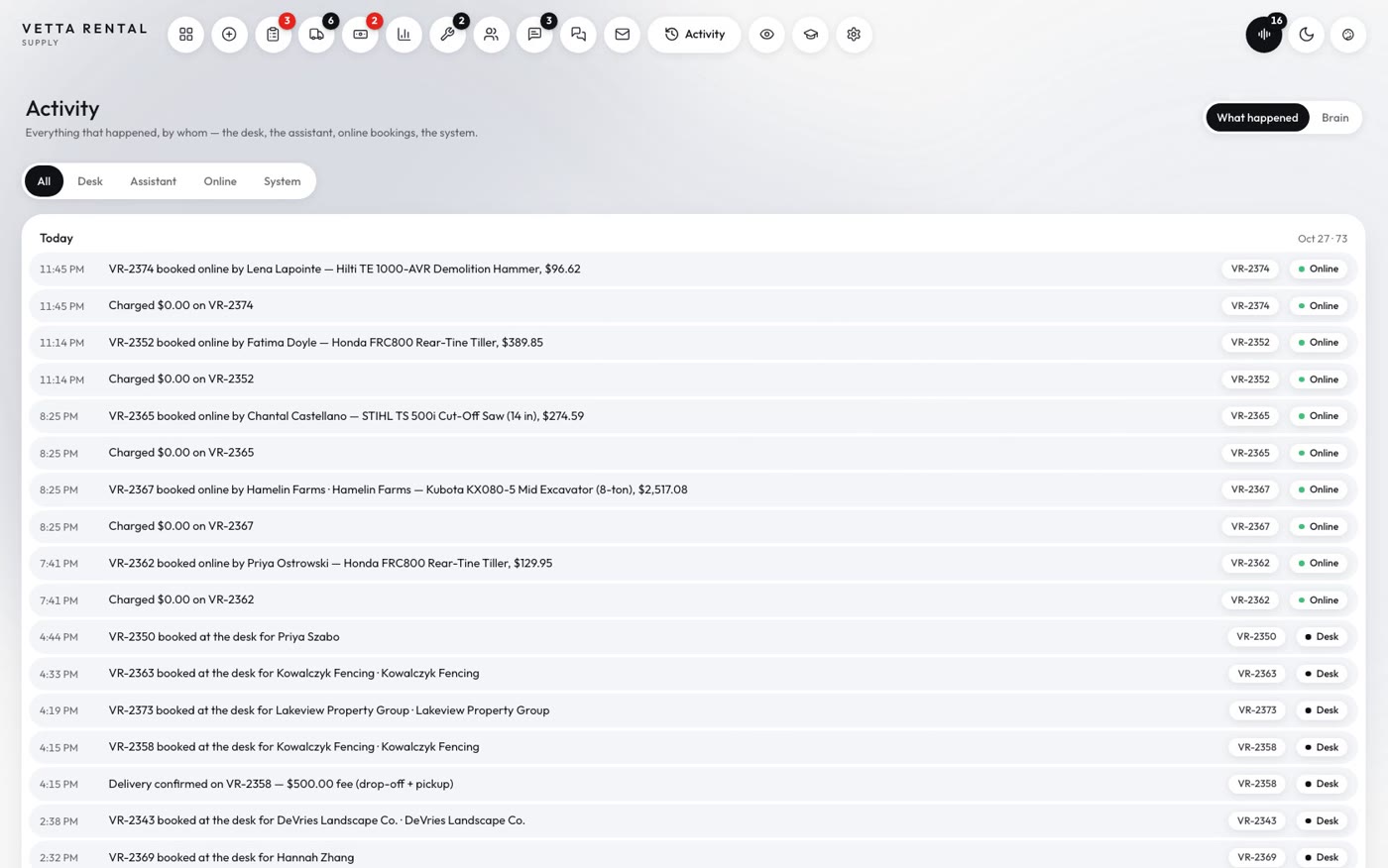
Everything that happened, one line each, with who: booked online, booked at the desk, charged, held, marked out, licence seen, texts drafted, approved and sent. Filter to only what the website did, or only what Vetta AI did. And what the software knows about the shop: the facts it carries into every conversation, the rules it runs by, and every correction the staff taught it.
How it goes in
Five steps, as the shop will live them.
The shop supplies clean machine names, rates, photos, hours and a customer export. Vetta does the rest, and is on the other end of it after go-live.
The sit-down
Hours, day and week rates, the rules on the terms, delivery zones and fees, deposits and the damage waiver. What the shop already does, written down once.
The import
Machines with their specs, photos, attachments and quantities. Customers from an export of whatever the shop runs on today.
The embed
Booking goes onto the shop’s own website with one line. The shop’s name, the shop’s colour.
The training
An hour at the counter with the staff: a booking, a pickup, a return, a delivery. Every texting rule starts on ask me first.
Go-live
The booking page goes live, the texts turn on, and the first online booking lands on the desk.
Who it’s for
Independent rental shops that take bookings by phone today.
One or two locations. An owner who wants the shop to take the booking when it is closed, and to see the whole shop on one screen when it is open.
After hours
The decision to rent is often made at 8 pm, after the weather or the job changes. A shop that cannot take it then loses the booking to the one that can, even when it was the customer’s first choice.
Who builds it
Vetta is Cole VanDuzen, in Niagara, building it with a working rental shop. Every install is set up in person, and nothing here is self-serve.
of United Rentals’ revenue in the first quarter of 2024 came from customers using one or more of its digital tools.
United Rentals, May 2024. Customers who use the tools, not rentals booked online.the conversion on abandoned online bookings, reported by Sunbelt Rentals after its checkout work.
Adobe case study. An enterprise vendor’s result, not a forecast for a local shop.of phone order entry replaced by 77 web orders at one event-rental company, about ten minutes an order.
Point of Rental case study. One event-rental shop, not an equipment-rental average.Start
Start with a conversation.
Tell us about the shop and what you are thinking about. We reply by email to book a walkthrough, and show a few of your own machines on a booking page before you see a price.